Return to: Sialography - How To and Do I Need To? Contemporary Infusion Digital Sialography
Presentation: 56 yo with 30+ yrs of xerostomia and xeropthalmia dx Sjogrens 15 yrs ago with +SSA +SSB. Has bilateral parotid swelling and pain every 4 weeks. Massage causes nasty taste in mouth
Exam: unremarkable (currently nontender) parotid glands with dry mouth unable to produce saliva with massage of glands
CT: atrophy of smg's; parotid glands with areas of fatty infiltration
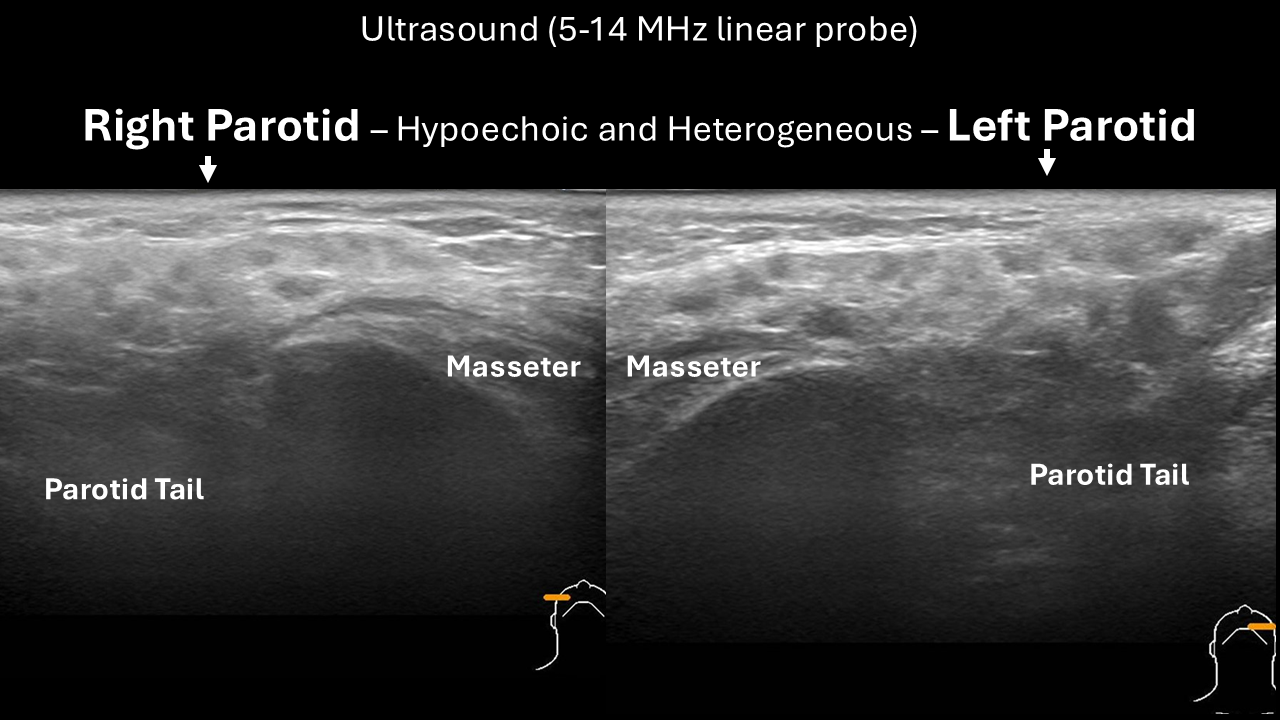
Ultrasound (POCUS at time of visit):
Panel Discussion Regarding Management
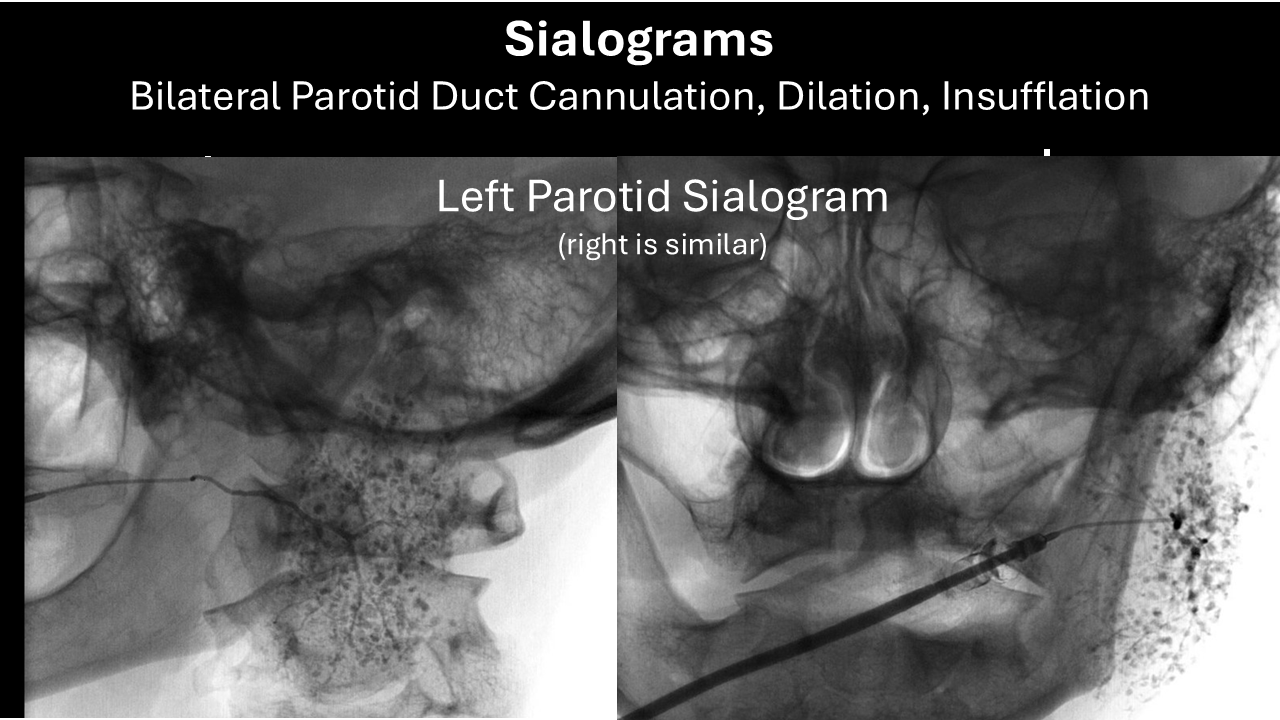
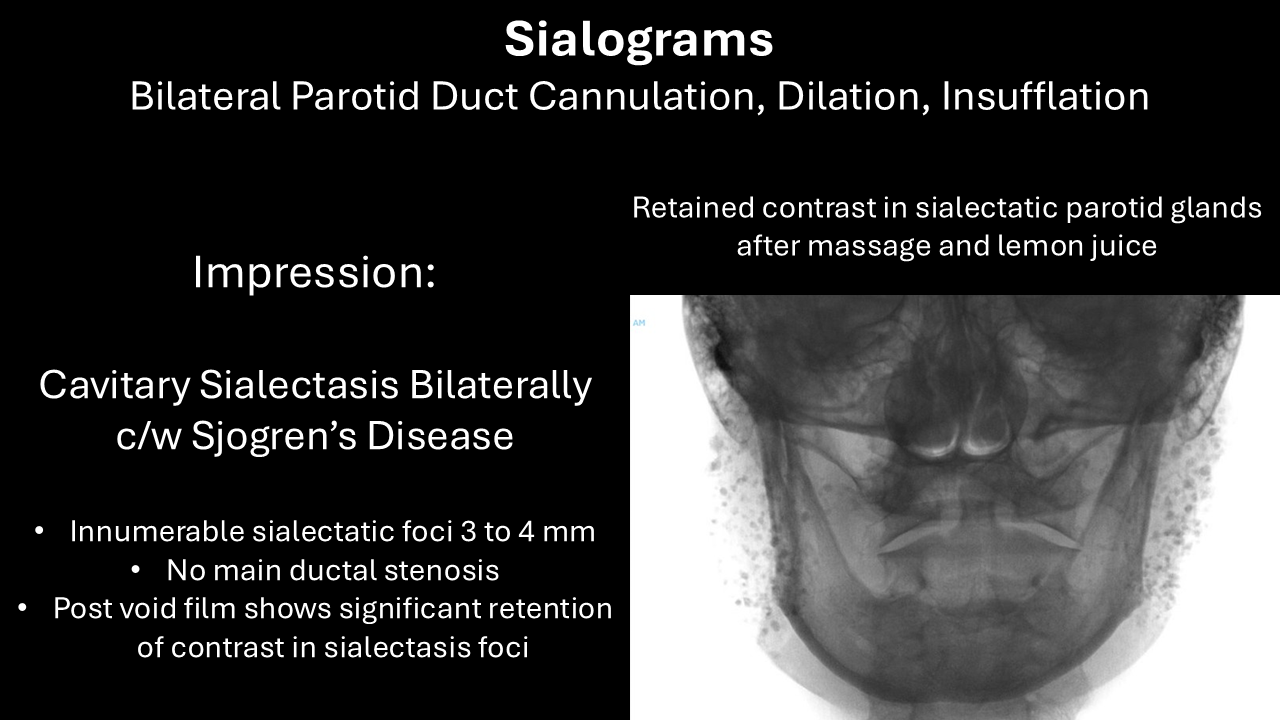
Sialograms:
Outcome:
- Immediately after sialogram in clinic: no tenderness or pain in either parotid - overall both feel better than before the sialogram
- 4 1/2 months after sialogram - marked improvement until symptoms beginning to recur past two weeks requesting steroid insufflation in clinic
- 6 months after sialogram In Clinic Procedure Bilateral Parotid Kenalog 10 Insufflation- (see further below)
- 3 1/2 months after last steroid infusion one episode of swelling occurred prompting scheduling a future repeat steroid infusion.
Procedure Note
In-Clinic 6 months after sialogram
Bilateral parotid duct cannulation dilation with steroid (Kenalog 10) infusion (2.5 cc to each side with egress after infusion)
Preop Diagnosis: Sjogren's syndrome with sialadenitis–improvement following sialogram
Postop Diagnosis: Same
Anesthesia: Oral swab with Betadine to the buccal mucosa bilaterally, 2% viscous lidocaine applied topically to the buccal mucosa bilaterally, premedication with Augmentin begin the morning of the procedure
Description of Procedure:
Following identification, informed consent, and a brief timeout in the minor room, began bilateral parotid duct cannulation dilation with steroid (Kenalog® 10) infusion
Following above pretreatment and ultrasound, overhead illumination and loupe magnification were used. Lateral traction on the left cheek was applied, revealing the left parotid duct orifice. A 0.015 inch guidewire was readily placed into the orifice. A 22-gauge angiocatheter was threaded around the wire through the Seldinger technique, controlled with a hemostat. The angiocath was readily advanced into the orifice followed by removal of the introducing 0.015 inch guidewire. Utilizing the hemostat to stabilize the angiocath in the duct, a Luer-Lok 5 cc syringe containing Kenalog 10 was attached to the hemostat. Gradual insufflation of the Kenalog was completed with frequent interruptions to assess for patient comfort for the infusion.
An identical procedure was performed on the contralateral/right side with slower insufflation done by the resident. The patient noted that the slower insufflation on the right side was less uncomfortable than the more rapid infusion done on the left side. She tolerated both procedures well without significant discomfort reported. Patient identified visual fullness to both glands, corroborated by post-insufflation ultrasonography supportive of good parenchymal perfusion.